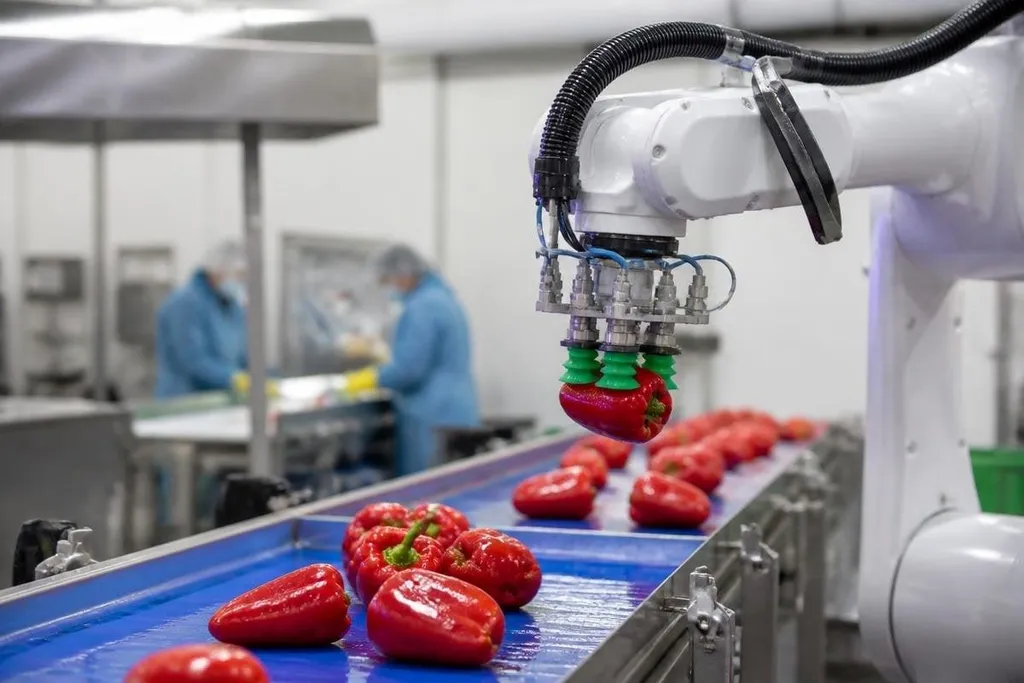
Food processing robots already handle tasks such as packing, sorting, palletizing, and inspection. The next stage will depend on how well they manage wet, soft, irregular food without damaging it or slowing the line.
Quick read
- Soft grippers and better vision will matter more than higher arm speed.
- Washdown, food safety, and quick changeovers will shape which robots reach production.
- People will still handle many tasks that change often or need fine judgment.
Where robots fit today
Food plants favor robots when the task repeats in the same place for long periods. A robot can move trays, place sealed packs into cases, stack boxes, or check products with cameras while people manage line changes and exceptions.
That division works because packaged goods have fixed shapes. Raw food is harder. A chicken fillet, fruit piece, dough portion, or baked item can vary in size, weight, surface, and position from one cycle to the next.
A robot arm needs more than a camera to handle that variation. It needs software that can locate the item, a gripper that can hold it without tearing or crushing it, and force control that can react when the item moves.
The gripper may use vacuum, flexible fingers, air pressure, or a tool made for one product. Each choice carries a trade-off. Vacuum can struggle with wet or porous surfaces, while rigid fingers may mark soft food.
The next gains will come from sensing
Vision systems will get more useful as cameras, lighting, and software work together on the line. A robot needs to tell the difference between a product, a piece of packaging, a damaged item, and a gap in the flow.
That task becomes harder when food arrives in a loose pile. The robot may see several possible items at once, then need to choose one that its gripper can reach without touching the rest.
Force sensing adds another layer. The arm can slow down when contact is detected, adjust its grip, or reject an item that does not sit correctly. This matters for foods that change shape under pressure.
For food-processing automation, Robot24.comrobotics coverage can show whether a reported system handled real products, under what test conditions, and with how much human help. That record matters before you treat a lab result as proof for a production line.
I expect the first wide gains to come from better handling of known products, not robots that can manage every food on the line.
Hygiene will set the design limits
A food plant cannot choose a robot from a normal factory catalog and assume it will fit. Surfaces must tolerate cleaning, cables need protection, and the robot’s shape must avoid places where food or water can collect.
Washdown also affects uptime. A machine that works well but takes too long to clean can slow the whole line. Tool changes create the same problem when one robot must handle several pack sizes during a shift.
Manufacturers will need to show how a robot fits the plant’s cleaning process, not only how fast its arm moves. Buyers will also need clear records for software changes, faults, maintenance, and rejected products.
Food safety adds a separate limit. The robot, gripper, lubricants, sensors, and nearby surfaces must suit the product and the plant’s rules. A machine that handles raw meat may need a different setup from one that packs dry goods.
People will remain part of the line
Automation can take over repeated movement, but many food tasks change with the product. Workers may still set up tools, remove damaged items, adjust recipes, clear jams, and check unusual results.
That makes training part of the purchase. A plant needs people who can clean the robot, check the gripper, read fault messages, and restart the cell safely after a stop.
The unproven area is flexible handling across many product types. A robot that works on one tray size may need new software, lighting, or tooling for another. The cost of those changes can decide whether a project moves beyond one production cell.
A buyer's checklist
Use these checks before choosing a food processing robot:
- Name the product range: list the sizes, shapes, temperatures, and surfaces the robot must handle.
- Watch the full cycle: include picking, placing, tool changes, cleaning, faults, and restart time.
- Test the worst items: use damaged, wet, soft, and badly positioned products rather than perfect samples.
- Check the gripper: confirm that it holds the product without marks, drops, leaks, or lost pieces.
- Plan for people: assign cleaning, maintenance, fault recovery, and product checks to named roles.
- Price the changes: include new tooling, vision setup, line changes, training, and service in the budget.
Food processing robots will spread where the task stays stable enough to automate and the cleaning process fits the machine. The next buyer question is not whether a robot can pick one perfect item, but whether it can do the same work after a full shift of real food, water, changeovers, and faults.